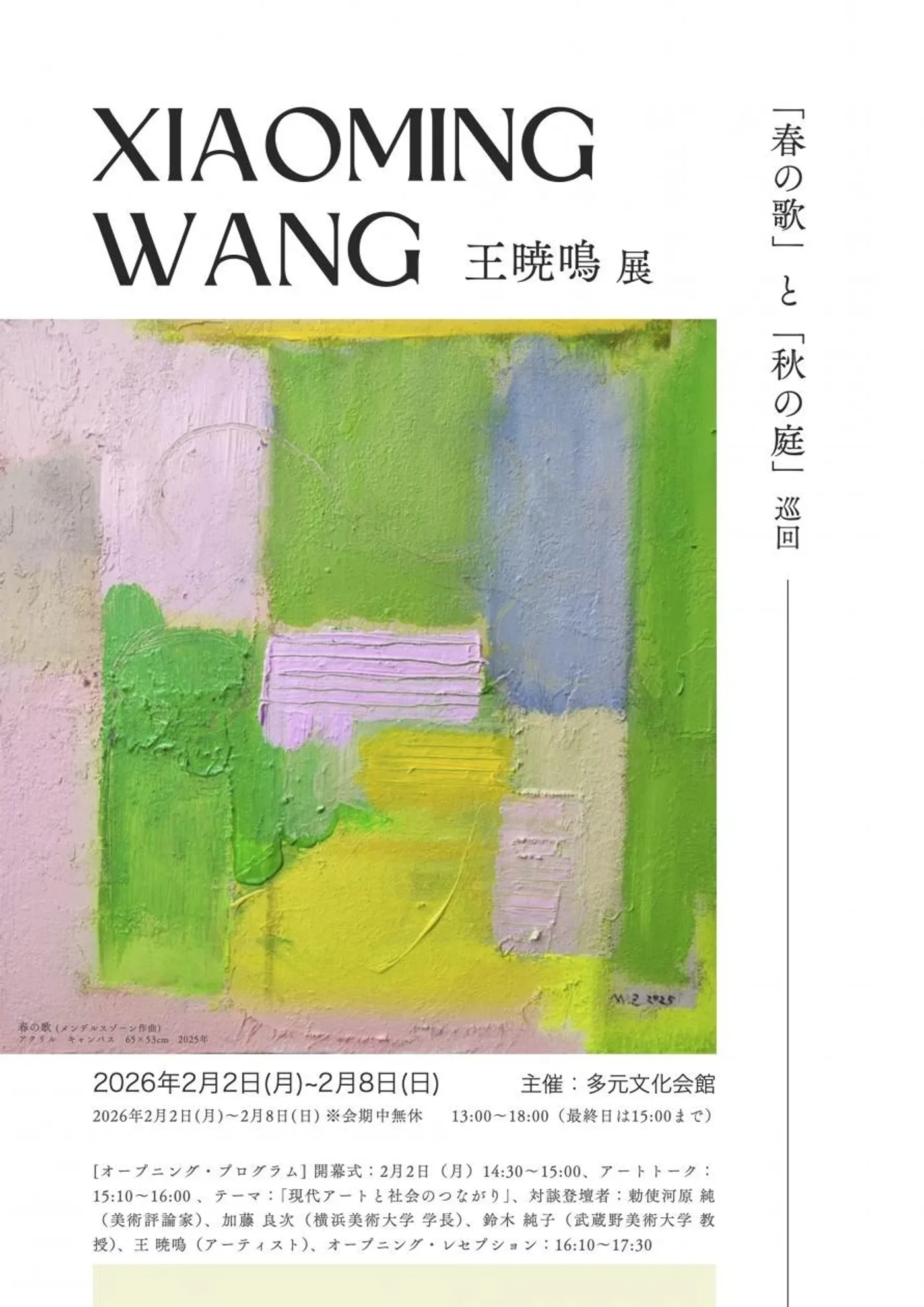
Harmony Without Borders — “Song of Spring”: Wang Xiaoming Exhibition
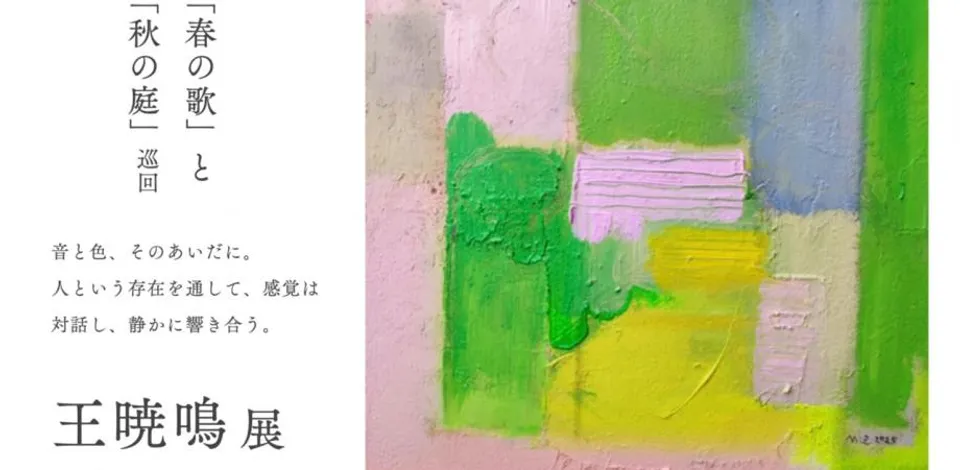
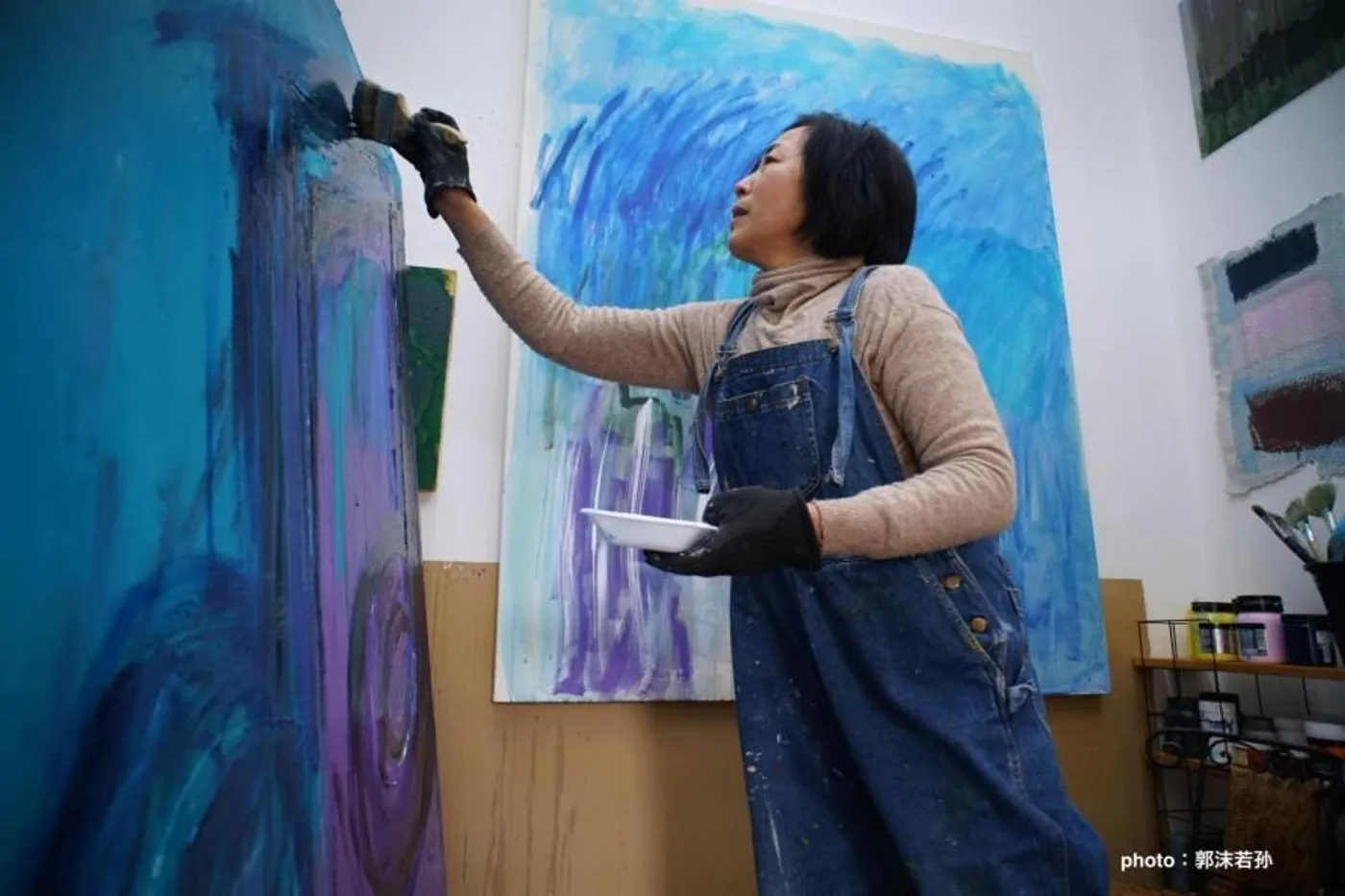
Art at its core resonates beyond any single form. For many years Wang Xiaoming has made music the central motif of her abstract paintings. Rather than depicting “sound” with line, structure or figurative form, she lets the feelings of performer and listener dissolve into layered colour, and through relations of colour and subtle change she builds a borderless bridge between sight and hearing, with the person as the link.
Harmony Without Borders — “Song of Spring”
Her work is not a simple visualisation of music. She sets sight and hearing side by side, lets them speak to each other and reconstructs them, and expresses the result subjectively through the form of painting. She has worked on abstract paintings based on classical music since 1996; hearing the Japanese pianist Nobuyuki Tsujii play “Pictures at an Exhibition” in 2009 brought her expression to maturity. It deepened her conviction that although each art has its own language, the spirit at its core is shared, and that people can cross the boundaries of media to reach a more subjective abstract expression.
What truly moves us is not only the “visible sound” and “audible colour” themselves. It is the deep regard for life, existence and value that runs beneath the work, which quietly puts a question to the viewer’s inner self. As Wilhelm Worringer wrote in “Abstraction and Empathy”, abstraction arises from the anxiety and search of people facing a complex world, and is an effort to seek lasting value. That thought is the spiritual foundation running through Wang Xiaoming’s recent work.
Zhang Xinying (art critic | curator, Guan Shanyue Art Museum), December 2025, Shenzhen
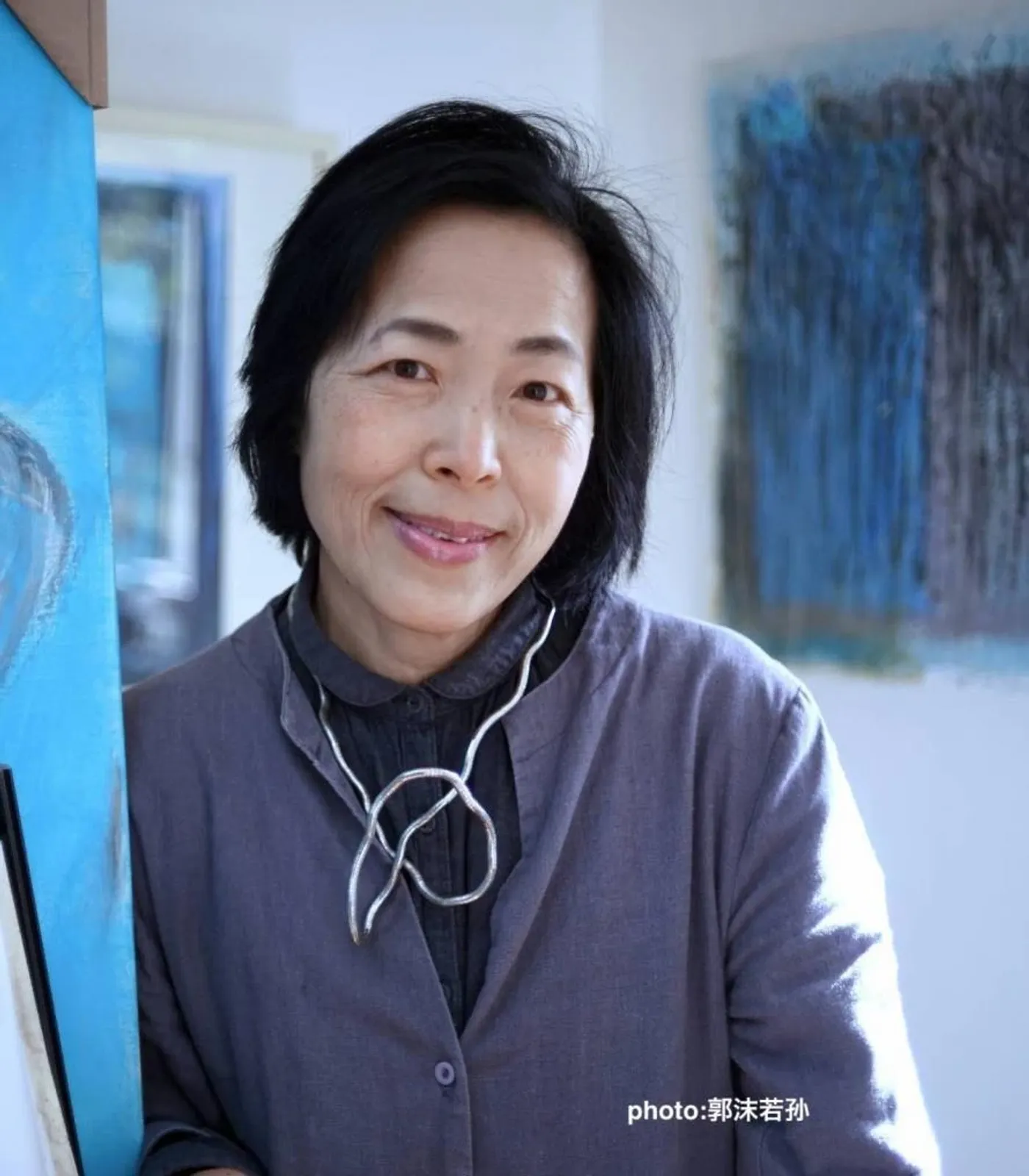
Wang Xiaoming — born in 1965 in Hunan, China. After graduating from the Oil Painting Department of the Guangzhou Academy of Fine Arts she came to Japan in 1990 and completed the graduate school of Kyoto City University of Arts (oil painting). Visiting professor at Tianjin Academy of Fine Arts, China, since 2001; adjunct associate professor at the School of Arts, Renmin University of China, since 2003. Member of the Japan Artists Association. Lives in Tokyo.
-----------
Through abstract painting on the theme of music, this exhibition explores the relationship between sight and hearing and the expressive possibilities where Eastern and Western civilisations and multiple cultures cross. It was planned to coincide with the 2026 Tokyo Tagen Symphony Orchestra New Year Concert, creating a place where music and art resonate with each other. Wang Xiaoming studied art at a leading Chinese university and has worked for more than 35 years in China, Japan and the United States; the cultural understanding grounded in that cross-border experience gives her work a plural perspective. The exhibition shines a light on the creative practice of a Chinese painter and presents the possibility of contemporary art, born of cultural resonance, that can contribute to the world.
Liu Lisheng, Representative, Tagen Bunka Kaikan, January 2026, Tokyo
Mon 2 – Sun 8 February 2026, 13:00–18:00 (until 15:00 on the last day)
Opening programme and opening ceremony: Mon 2 February, 14:30–15:00
Art talk: 15:10–16:00. Theme: “Contemporary art and its ties to society”
[Speakers]
- Jun Teshigawara (art critic)
- Ryoji Kato (President, Yokohama University of Art and Design)
- Junko Suzuki (Professor, Musashino Art University)
- Wang Xiaoming (artist)
Opening reception: 16:10–17:30