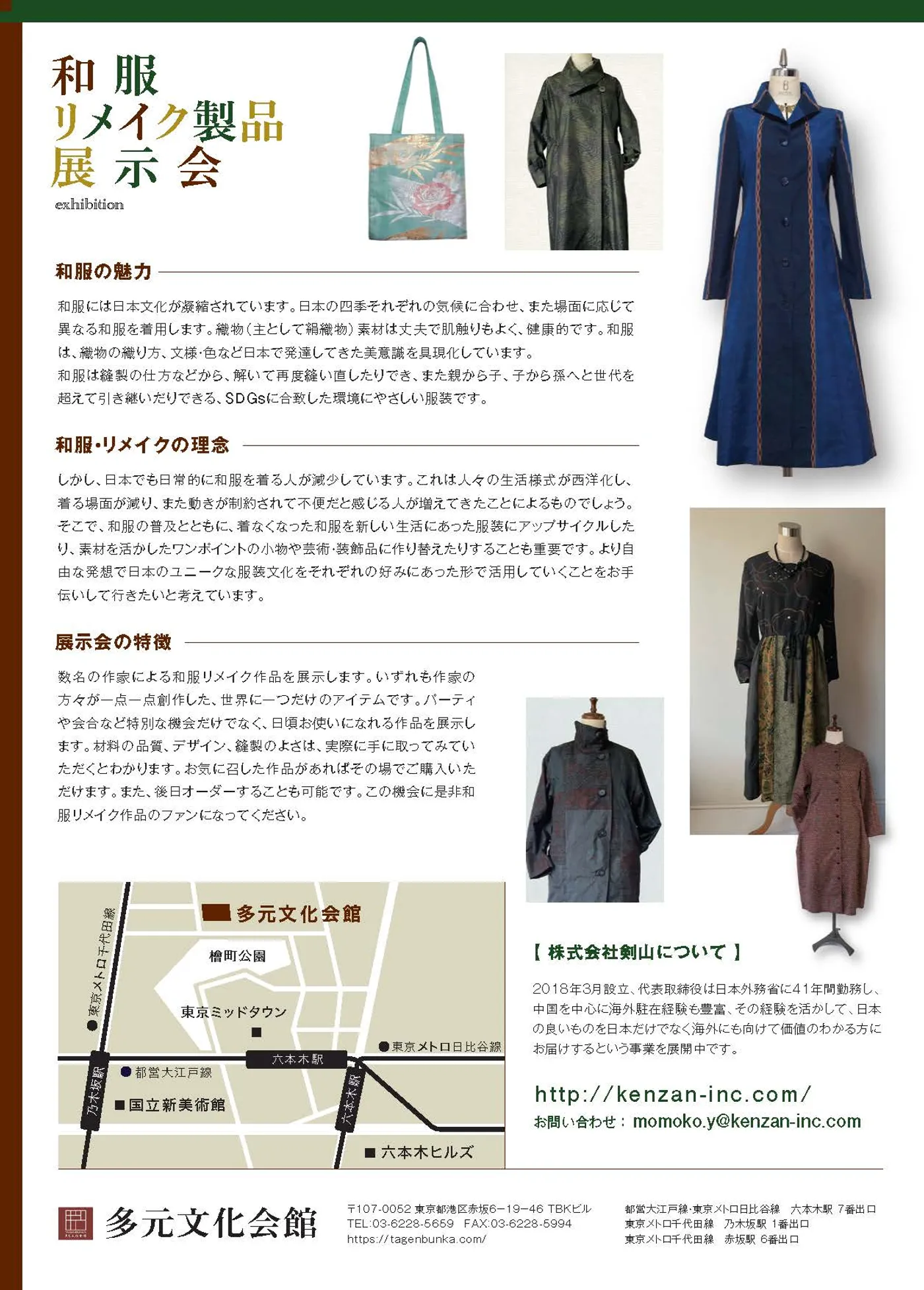
Kimono Remake Exhibition
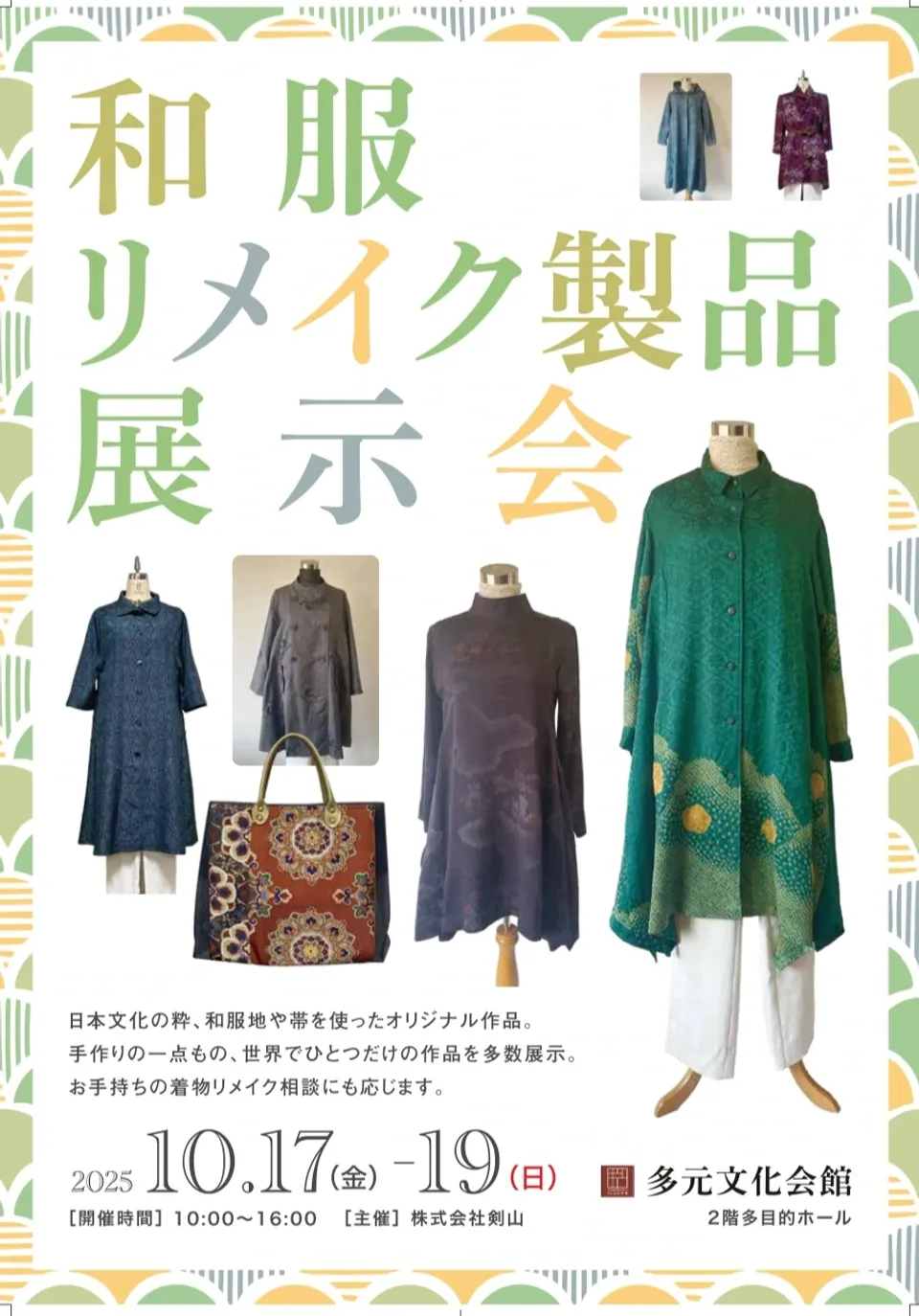
Original pieces made from kimono fabric and obi — the essence of Japanese culture. Many handmade, one-of-a-kind works on show. Advice on remaking your own kimono is also available.
Organiser: Kenzan Inc.
4-2-5 Ikenohata, Taito-ku, Tokyo 110-0008
Enquiries: momoko.y@kenzan-inc.com
The appeal of kimono
Japanese culture is distilled in the kimono. Different kimono are worn for each of Japan’s four seasons and for different occasions. The fabric (mainly silk) is durable, pleasant to the touch and healthy to wear, and the weave, patterns and colours embody the sense of beauty that developed in Japan. Because of the way it is sewn, a kimono can be unpicked and sewn again, and passed down from parent to child and from child to grandchild — a gentle, SDGs-friendly kind of clothing.
The idea behind kimono remaking
Yet even in Japan fewer and fewer people wear kimono every day. Lifestyles have become Westernised, there are fewer occasions to wear them, and more people find them restrictive and inconvenient.
Alongside promoting the kimono itself, it is therefore important to upcycle kimono that are no longer worn into clothes that suit a new way of life, or to remake the fabric into small accents, works of art and decorations. We would like to help everyone enjoy Japan’s unique clothing culture, with freer ideas and in a form that suits their own taste.
About the exhibition
The works of several artists who remake kimono are on show. Each item is created one by one by the artist and exists nowhere else in the world. Besides pieces for parties and other special occasions, there are pieces you can use every day. The quality of the materials, the design and the sewing are easy to appreciate when you hold the pieces in your hands. If you like something you can buy it on the spot, or order it later. We hope you will become a fan of remade kimono.